
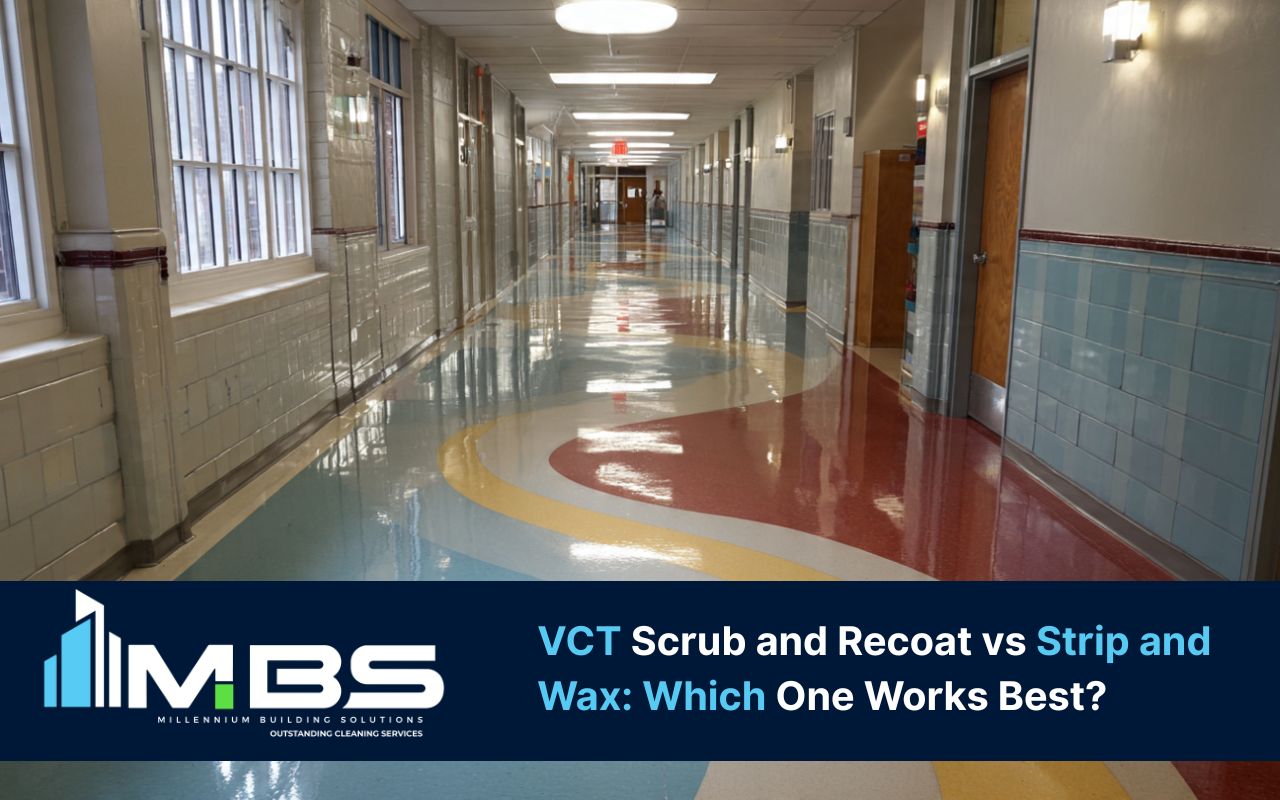
Choosing the right flooring maintenance method can feel confusing, especially when comparing VCT scrub and recoat vs strip and wax. Each method can improve how your floors look and how long they last. However, the best choice often depends on finish durability, slip resistance, and how much downtime your space can handle.
When you maintain commercial floors, details matter. It is not only about shine. It is also about safety and efficiency. With the right plan, your floors can look great, reduce accident risk, and stay open for daily operations. Millennium Building Solutions LLC helps facilities weigh these options based on traffic, scheduling, and expectations.
Understanding the VCT Scrub and Recoat Process
The scrub and recoat method refreshes vinyl composite tile (VCT) floors without removing the entire finish. First, a neutral cleaner and a floor machine with a scrubbing pad lift dirt, scuffs, and worn finish. Then, the floor is rinsed and fully dried. After that, a fresh coat of finish is applied to seal and brighten the surface.
Most facilities schedule this every 4 to 8 weeks, depending on foot traffic. Because it avoids a full removal, it often reduces labor and harsh chemical use. As a result, it can support indoor air quality while keeping floors looking fresh. Millennium Building Solutions LLC often recommends this routine approach for active buildings that need fast turnaround.
Advantages of VCT Scrub and Recoat
This method is popular because it is fast and effective. Since you restore the existing finish instead of removing it, floors can return to service in a few hours. Therefore, it works well for schools, hospitals, and retail spaces where closures cause problems.
- Reduced downtime, so areas reopen faster
- Lower labor needs because the process is shorter
- Less chemical use compared to a full strip
- Helps build finish durability over time with consistent upkeep
Limitations of VCT Scrub and Recoat
Even though it is efficient, it cannot fix everything. Deep scratches, stubborn stains, or yellowed layers may still show through after recoating. In that case, the floor can look cloudy rather than bright.
- Does not fully remove deep stains or heavy wear
- Finish layers can build up and create haze over time
- Requires strict cleaning and drying to avoid trapping debris
Because of that, some facilities plan an occasional full restoration when buildup becomes noticeable. Millennium Building Solutions LLC can help time that reset so you avoid surprise interruptions.
Exploring the Strip and Wax Method
Strip and wax is a deeper process that removes all existing finish layers using a stronger stripper. Then, the floor is rinsed and cleaned to remove residue. Once it is completely dry, multiple coats of finish are applied. Each coat needs time to set before the next one goes down.
This method resets the surface, which helps new layers bond well and look uniform. Although it takes more time and labor, it can restore heavily worn floors to a like-new appearance. If you want more details on what this service involves, you can review floor stripping and waxing as part of a long-term care plan.
Benefits of Strip and Wax
When floors need a true reset, strip and wax can deliver a clean slate. By removing old layers, it eliminates discoloration that recoating cannot fix. As a result, the new finish can look brighter and more consistent.
- Removes yellowed or damaged finish layers
- Improves adhesion, which can boost finish durability
- Helps eliminate deep stains and embedded grime
- Creates a more uniform surface when done correctly
Drawbacks of Strip and Wax
Strip and wax is more demanding. It requires stronger chemicals, more supplies, and more labor. Also, drying and curing time often stretches the closure window. Therefore, many businesses schedule it during evenings or weekends to reduce disruption.
- Higher labor and material needs
- More downtime, often a full day or longer
- More fumes and ventilation needs due to stronger strippers
Comparing Finish Durability
Finish durability is a key reason people compare VCT scrub and recoat vs strip and wax. A full strip often creates a stronger base because the new finish bonds directly to the tile. That direct bond can help it last longer under heavy traffic.
However, scrub and recoat can still perform well when done on a steady schedule. The layers build gradually, which can protect against scuffs and stains between restorations. So, strip and wax may win for a single long-lasting reset, while scrub and recoat supports dependable upkeep with fewer interruptions.
Analyzing Slip Resistance
Slip resistance depends on the finish choice and how well it is applied. Strip and wax can create a smooth, even layer. When you select a product designed for traction, it can support safer walking paths. Still, too much buildup can make any floor less predictable, so good technique matters.
With scrub and recoat, each new layer can fill minor scratches, which helps create a more consistent surface. Also, teams can adjust product selection to support safer traction. In both methods, proper cleaning matters because soil and residue can change traction more than people expect. Millennium Building Solutions LLC focuses on balanced results that protect shine while supporting safety goals.
Minimizing Downtime: VCT Scrub and Recoat vs Strip and Wax
Downtime is often the deciding factor in VCT scrub and recoat vs strip and wax. Scrub and recoat usually reopens areas within hours, since it involves lighter cleaning and fewer curing steps. Because of that, it fits busy spaces with limited after-hours windows.
Strip and wax takes longer because stripping, rinsing, drying, and multiple coats all require time. Therefore, many facilities reserve it for planned closures, holidays, or slow periods. If you want help planning a schedule that fits operations, you can reach Millennium Building Solutions LLC through the contact page.
Frequently Asked Questions
How often should VCT scrub and recoat be scheduled?
Many facilities schedule it every 4 to 8 weeks, depending on foot traffic and how quickly the finish shows wear.
When is strip and wax the better option?
It is often better when the floor has deep stains, heavy scratches, yellowed finish, or too much buildup that causes haze.
Which method typically improves finish durability the most?
Strip and wax can improve finish durability more after one service because it starts from a clean base. However, consistent recoating can still protect well over time.
Does either method guarantee better slip resistance?
Both can support strong slip resistance when the right finish is used and applied correctly. Product choice and clean maintenance are essential.
How can businesses reduce downtime during floor maintenance?
They can use scrub and recoat for routine care, then schedule strip and wax during evenings, weekends, or planned closures to limit disruption.
Making the Right Choice
Deciding between VCT scrub and recoat vs strip and wax depends on what matters most in your facility. If you need a faster, budget-friendly routine that keeps areas open, scrub and recoat is often the best fit. It supports steady protection, good slip resistance, and less downtime.
However, when floors show heavy wear, stains, or thick buildup, strip and wax can restore a like-new look and a more even finish. For a plan that matches your traffic, goals, and schedule, Millennium Building Solutions LLC can guide you toward the best maintenance cycle. Millennium Building Solutions LLC also helps you align service timing with operations, so your floors stay clean, safe, and ready for daily use.