
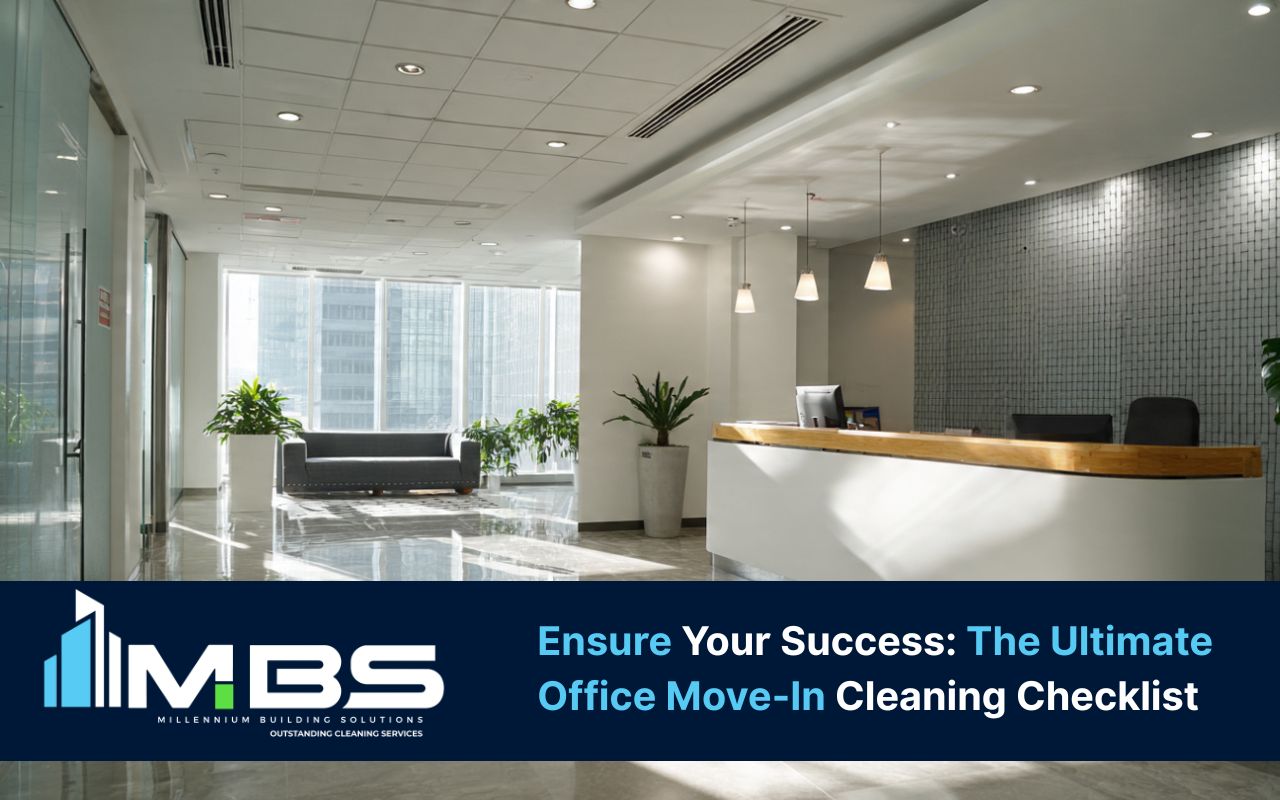
Consider the excitement of stepping into a new office space—fresh beginnings and new opportunities. However, before you settle in, there’s one step that can shape your transition: the big clean-up.
Moving in isn’t only about desks and computers. Instead, it’s about creating a clean space that supports productivity from day one. That’s why an office move-in cleaning checklist matters, so nothing is missed and everything shines. Without clear steps, turnover cleaning can feel chaotic and hurt your timelines. This guide shares scope inclusions to help you move in smoothly and focus on growth.
Preparing for the Clean-Up Day
First, map the floor plan and note high-traffic zones. Then, list tasks for your office move-in cleaning checklist, from wiping walls to vacuuming carpets. Next, decide who will help, whether you hire pros or assign your team. By setting clear roles, you reduce overlap and cover every corner. Also, add simple timelines for reception, shared areas, and private offices.
Meanwhile, confirm your scope inclusions with the landlord or facility manager. For example, ask if window washing or HVAC filter changes are included under building care. This clarity cuts surprises and saves time. Finally, share the schedule so the day starts and ends smoothly.
Cleaning Supplies and Equipment Essentials
To begin, gather supplies so turnover cleaning stays fast and detailed. For example, stock microfiber cloths, multi-surface cleaner, glass cleaner, and disinfectant wipes. Also, bring brooms, mops, a vacuum with attachments, and trash bags. For safety, add gloves and, if needed, eye protection. Additionally, use a caddy or cart to cut wasted steps.
- Microfiber cloths, paper towels, and extra sponges
- Multi-surface cleaner, glass cleaner, and disinfectant wipes
- Vacuum with attachments, mop, broom, and trash bags
- Gloves and simple eye protection for heavy scrubbing
Also, organize gear in one spot so everyone can grab items quickly. Label bins for solutions and refills, which reduces downtime. If you hire a crew, confirm their tools match your scope inclusions. Clear communication prevents duplication and protects timelines.
Deep Cleaning the Common Areas
Start with reception and hallways because first impressions matter. First, vacuum carpeted areas and mop hard floors to remove dust. Then, wipe walls, baseboards, and light switches with a gentle all-purpose cleaner. Also, remove scuffs and fingerprints near doors. This approach sets a clean standard across the office.
- Vacuum carpets and mop hard floors
- Wipe walls, baseboards, and switches
- Spot-clean scuffs and door fingerprints
Next, clean conference rooms and breakout spaces. Wipe tables, chairs, and shared equipment carefully. Also, dust vents and light fixtures with a microfiber cloth. If furniture has stains, treat them right away. As a result, shared zones feel more comfortable and support better teamwork.
Sanitizing Restrooms and Kitchen Areas
First, sanitize high-touch spots like faucet handles, door knobs, and counters. Then, use an EPA-approved disinfectant to cut germs. Clean mirrors, sinks, and dispensers for a polished look. Also, restock soap and paper items before the team arrives.
- Disinfect handles, knobs, and counters
- Clean mirrors, sinks, and dispensers
- Restock soap and paper supplies
Likewise, deep-clean the kitchen or breakroom. Wipe countertops, disinfect fridge handles, and clean microwaves inside. Sweep and mop floors with a disinfecting cleaner. Then, empty and sanitize bins and replace liners. Consequently, you prevent odors and support a healthier space.
Dusting and Disinfecting Workspace Surfaces
Start by dusting desks, shelves, and electronics with a soft microfiber cloth. Remove buildup around keyboards, monitor bases, and desk fans. If items move easily, lift them to clean beneath. Since dust can trigger allergies, thorough removal improves air quality. Move row by row, so you stay consistent.
After that, disinfect desks, chairs, and phones using wipes or spray. Focus on touchpoints like armrests and table edges. Then, let surfaces air-dry if the label requires it. This two-step routine keeps areas clean and safer, which supports productive days.
Window and Mirror Cleaning Tips
Apply streak-free cleaner to windows, starting at the top and moving down. Then, use a squeegee with overlapping strokes for a clear finish. Also, clean sills and tracks because trapped dirt can spread when windows open. Better light makes the whole space feel brighter.
For interior mirrors and glass walls, spray lightly and wipe with a lint-free cloth. Use circular motions to remove smudges. If needed, mix water with a few drops of dish soap for a simple option. Clear glass helps the office look fresh from every angle.
Flooring Care and Carpet Cleaning
First, identify flooring types—carpet, tile, vinyl, or hardwood—because each needs a different method. For carpet, vacuum well and use attachments for edges. Then, consider a deep extractor or pros for heavy traffic areas. For hard floors, sweep first, then mop with a material-safe cleaner.
For hardwood, use a gentle cleaner and a damp mop, avoiding too much water. For tile, scrub grout with a brush and a mild bleach mix if needed. Well-kept floors last longer and look more professional. If you want a cleaning partner for your move, reach out to Millennium Building Solutions LLC for planning help and clear scope inclusions.
Eliminating Clutter and Organizing Storage Spaces
Before unpacking, sort boxes, files, and supplies to decide what stays. Then, use labeled bins or shelves for easy access. Encourage the team to recycle outdated items. As a result, storage stays neat and clutter doesn’t return quickly. This step also supports smoother timelines during move-in.
- Sort items before unpacking
- Label bins and shelves for quick access
- Recycle outdated or unused materials
Create zones for basics like stationery, printer paper, and spare cables. Place daily items within reach, while rare items go higher or in locked cabinets. Therefore, everyone knows where things belong and work areas stay tidy.
Frequently Asked Questions
How early should I start an office move-in cleaning checklist?
Ideally, start planning at least one to two weeks before move-in. That way, you can set timelines and confirm scope inclusions.
What is included in turnover cleaning for an office?
Often, it includes floors, restrooms, kitchens, common areas, and touchpoints. However, scope inclusions can vary by building and lease terms.
Should I clean before or after furniture arrives?
Whenever possible, clean before furniture arrives. As a result, you can reach corners, vents, and floors without obstacles.
How do I set realistic timelines for the clean-up day?
Break tasks by zones and assign owners. Then, estimate time per area and add a buffer for surprises.
When should I hire a professional cleaning crew?
If the space is large, time is tight, or you need a deeper clean, hiring pros helps. For example, Millennium Building Solutions LLC can align scope inclusions and reduce workload.
Final Touches and Inspection
Review your office move-in cleaning checklist one last time to confirm every task is done. Walk each area and check under desks and in corners. Also, invite a colleague or building manager, since fresh eyes catch small misses. Then, fix any issues right away, like streaked glass or dusty vents.
Confirm timelines were met and scope inclusions were completed. Once satisfied, remove temporary signs and set up furniture and equipment. If you need support coordinating the final walkthrough, Millennium Building Solutions LLC can help keep the process smooth and organized.
Celebrating Your Fresh Start
Stepping into a newly cleaned office builds pride and momentum. By following this office move-in cleaning checklist, you reduce stress and avoid missed details. With smart planning, the right supplies, and steady steps, your workspace will feel ready from day one. For guidance that fits your needs and timelines, Millennium Building Solutions LLC is a helpful next step.