
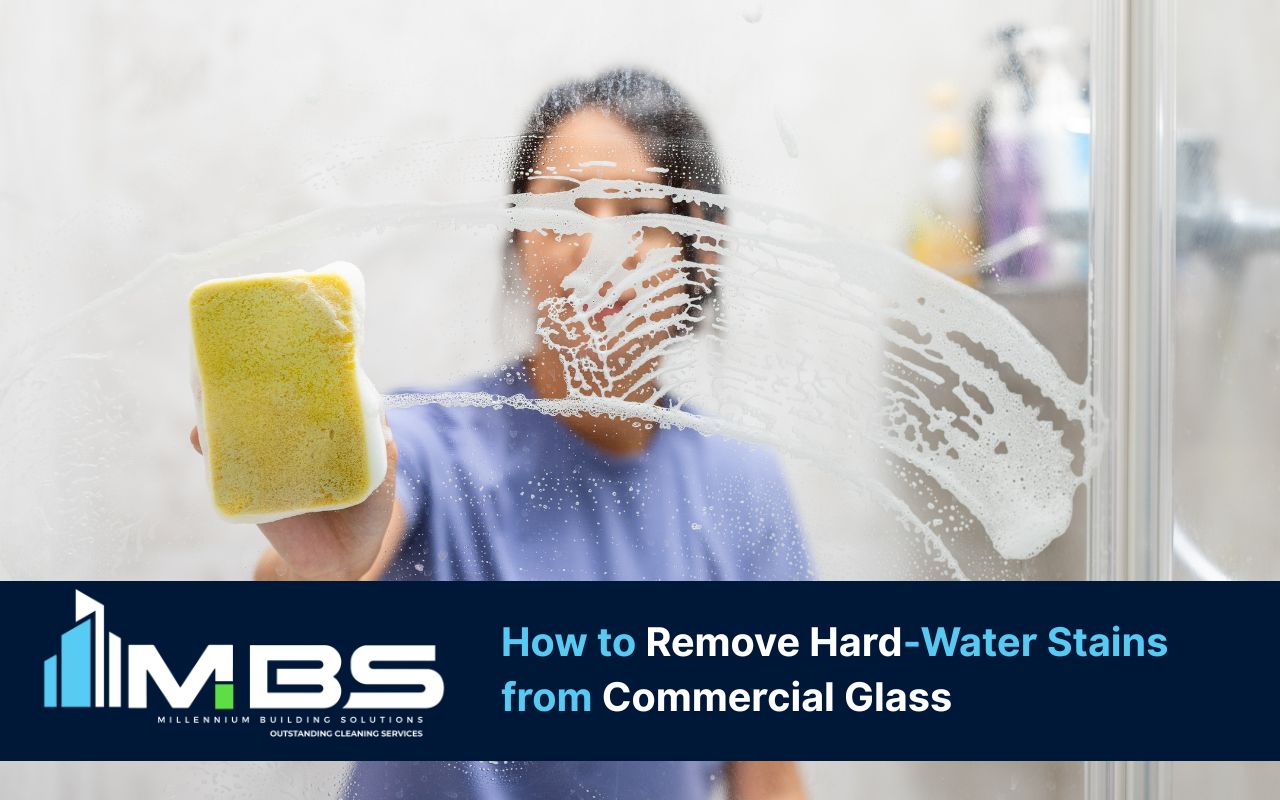
Conquer glass hard water stains with practical solutions that work. If opaque, cloudy marks frustrate you, you are not alone. These stains come from mineral deposits. Consequently, they reduce the professional look of your business. Glass Hard Water Stain Removal restores clarity fast. In this guide, we will share steps, tools, and prevention tips you can use today.
First, we will explore reliable options that dissolve blemishes without complex gear. Then, you will learn which mineral deposit remover to choose and how to use safety pads correctly. In addition, you will get prevention tips to stop future buildup. With this Glass Hard Water Stain Removal guide, you can maintain spotless glass. As a result, your business will shine for visitors and clients.
Understanding Hard Water Stains on Commercial Glass
To start, recognize stains by cloudy, white streaks that ignore soap and water. These spots are mineral deposits left after hard water evaporates. Typically, hard water carries calcium and magnesium that cling to glass. Over time, this buildup turns thick and opaque. As a result, windows, doors, and displays start to look dull.
Therefore, know why stains form to solve them faster. As water dries, tiny minerals stay behind and stack up. On busy sites, you see quick buildup from rain and sprayers. Without Glass Hard Water Stain Removal, storefronts soon look neglected. In turn, that risks a poor impression with customers and clients.
Choosing the Right Mineral Deposit Remover
Before you buy a mineral deposit remover, check ingredients and uses. Always pick products designed for glass. Many use mild acids or chelating agents. These ingredients dissolve deposits without scratching. Whenever possible, choose formulas labeled safe for commercial glass. On the other hand, avoid harsh options that could etch surfaces over time.
- First, review professional and user feedback.
- Next, note if dilution is required or ready-to-use.
- Whenever possible, prefer biodegradable or low-VOC options.
- Finally, test on a small, hidden area first.
After that, compare brands and directions carefully. Some solutions need mixing, while others spray directly. A quick compatibility test prevents damage or discoloration. Ultimately, this step supports reliable Glass Hard Water Stain Removal outcomes.
Applying Mineral Deposit Remover Effectively
To begin, prepare glass first. Rinse away loose soil to prevent scratching. Then apply the remover by spray or cloth, as the label directs. Let it sit for the recommended dwell time—five to ten minutes is common. During this pause, chemistry works through stubborn mineral layers.
- First, rinse the surface to remove grit.
- Next, apply the product as labeled.
- Then, wait the proper dwell time.
- Afterward, gently scrub in circles.
- Finally, rinse well and dry with a lint-free cloth.
Throughout the process, use a soft cloth or sponge with light pressure. Then rinse with fresh water and dry fully. Over time, routine Glass Hard Water Stain Removal keeps glass clear and streak-free.
Utilizing Safety Pads for Scrubbing
To protect glass, pick safety pads that reduce scratch risk. These non-abrasive pads use nylon or soft foam. As a result, they provide friction without harming glass. Always choose pads labeled scratch-free for commercial glass.
For best results, pair safety pads with the remover after dwell time. Rub evenly in straight lines or gentle circles. Meanwhile, rinse the pad and glass often. This prevents trapped particles from scratching. Finally, finish with a full rinse and dry to reveal clarity.
Techniques for Removing Stubborn Stains
Vinegar Method
For light to moderate buildup, mix white vinegar and water at 1:1. Then spray the glass. To boost contact time, cover with plastic wrap for fifteen minutes. The mild acid loosens minerals. Afterward, scrub with safety pads. Finally, rinse thoroughly for a clean finish.
Baking Soda Paste
Alternatively, blend baking soda and water into a paste. Apply to stained spots for ten minutes. Then scrub gently in circles. Rinse and dry with a soft cloth. For extreme patches, you may use a razor at a low angle, with care and light pressure.
After each attempt, reapply your chosen solution and rinse clean. Taken together, these steps strengthen Glass Hard Water Stain Removal for difficult areas.
Preventative Measures to Avoid Future Stains
- First, install a water softener to reduce minerals at the source.
- Next, use a squeegee after rain or spritzing to remove water quickly.
- Also, keep microfiber towels ready for spot checks.
- Finally, apply protective coatings to repel deposits.
In the long run, investing in soft water cuts cleaning time and heavy-duty needs. Likewise, regular drying stops spots before they harden. A coating further helps minerals release easily. Altogether, these prevention tips reduce long-term damage and keep glass bright.
Maintaining Spotless Commercial Glass Surfaces
To stay ahead of buildup, create a schedule for weekly inspections and cleanings. This way, you catch buildup early. Use mild, pH-neutral cleaners for routine care. In busy zones, do daily spot checks for prints and light marks. Additionally, store key tools nearby for speed and consistency.
For convenience, stock soft cloths, safety pads, and small spray bottles of Glass Hard Water Stain Removal solution at entrances. Then train staff on a simple flow: rinse, apply, dwell, scrub, rinse, and dry. Finally, log sessions to track hot spots and adjust the plan as needed.
Frequently Asked Questions
How often should I perform Glass Hard Water Stain Removal?
For most businesses, light maintenance weekly works well. However, tackle heavy buildup monthly or as needed.
Which mineral deposit remover is safest for commercial glass?
In general, choose glass-specific products with mild acids or chelating agents. Still, always patch test first.
Do safety pads scratch glass?
When used correctly, scratch-free pads are designed to avoid damage. Nevertheless, rinse pads and glass often during use.
Can vinegar replace commercial products?
Vinegar helps with mild deposits. However, for heavy buildup, use an EPA-labeled glass solution.
How can I prevent stains long term?
For long-term success, use a softener, squeegee after water exposure, and apply protective coatings. Above all, follow prevention tips consistently.
Enhancing Your Business’s Professional Image through Clean Glass
Pristine glass creates a welcoming atmosphere. Furthermore, streak-free panels boost light and visibility. Customers feel confident in cared-for spaces. Clear windows showcase displays and branding, while offices gain a modern, open feel. Overall, consistent Glass Hard Water Stain Removal supports a polished brand image.
For additional services or guidance, visit Millennium Building Services or Contact Millennium Building Services. With structured care and smart choices, your results will last longer.
Achieving Pristine Glass Surfaces
In conclusion, consistent Glass Hard Water Stain Removal safeguards your investment in a sleek look. Select the right mineral deposit remover and proper tools. Then tackle tough spots methodically. Finally, add prevention tips like soft water and squeegee habits. Whether retail or office, spotless glass sets the tone. Follow these steps and keep clarity every day.