
OSHA winter floor safety starts at the door, especially in colder months. Icy entrances and slick floors can turn a normal day into a hazard. However, with the right steps, accidents drop fast.
Millennium Building Solutions LLC supports safer buildings with simple routines. Therefore, tools like wet signage, entry mats, and a burnishing schedule can protect everyone. As a result, employees and visitors move with more confidence.
Why Winter Floor Safety Matters
When winter hits, hazards multiply. Floors get slick from melting snow and ice, so slips and falls rise. OSHA winter floor safety helps teams stay ahead of these risks.
Therefore, you can reduce injuries, avoid lost workdays, and protect morale. In addition, consistent practices show you value people and build trust across the workplace.
Common Winter Hazards Indoors
Snow tracked inside melts and leaves damp patches in busy areas. Then, cold air can refreeze water on tile, vinyl, or cement. Even thin ice can cause a serious fall.
So, watch entryways, corridors, and stairwells. Additionally, routine checks help you spot new problem areas as weather changes.
Entryway Steps That Reduce Slips
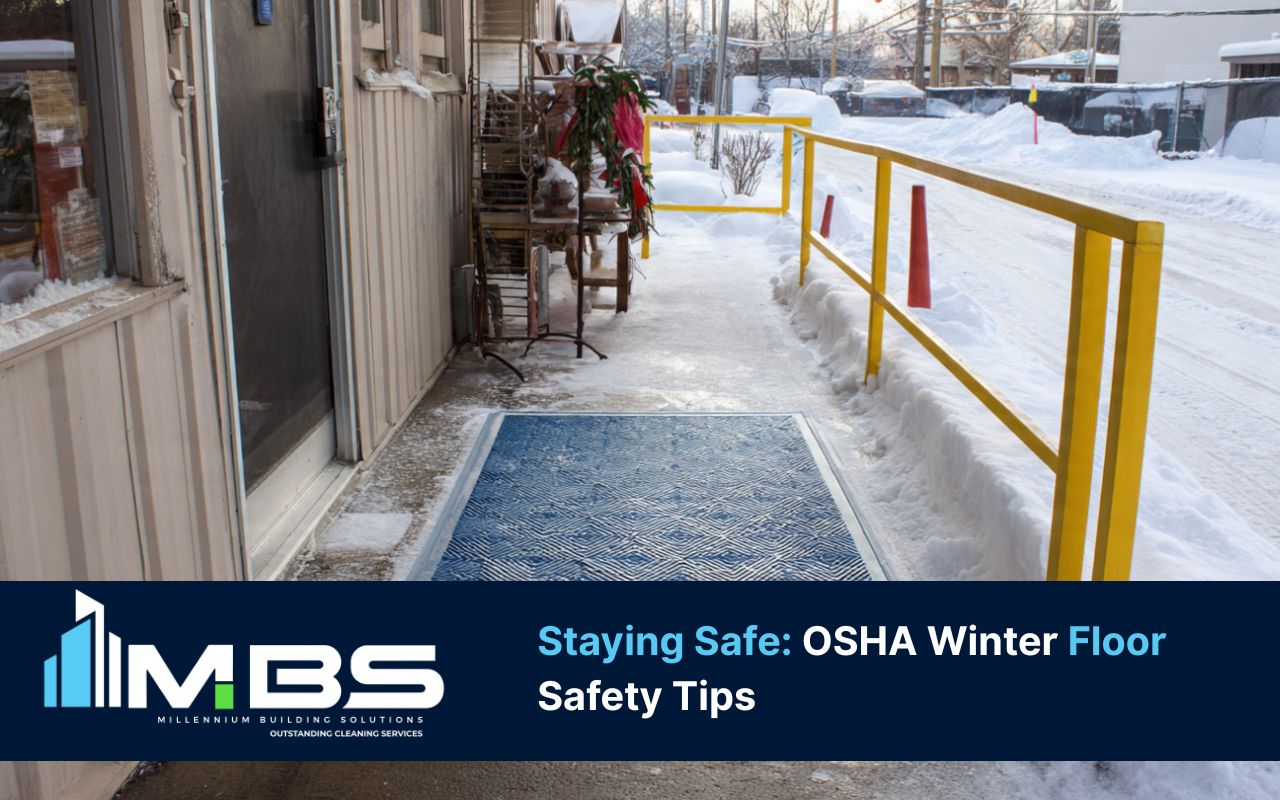
A clear entry plan keeps moisture from spreading. Entry mats should cover the full threshold and stay clean. However, mats can become hazards if they stay soaked.
- Place entry mats outside and inside each door for layered moisture control.
- Clean, rotate, and dry mats daily, especially after heavy traffic.
- Set wet signage near doors during snowy or rainy weather.
- Inspect mat edges so they lay flat and do not curl.
Millennium Building Solutions LLC often starts safety improvements at the entry point. Consequently, floors stay drier and traffic moves more smoothly.
Footwear That Fits Winter Conditions
Encourage shoes with non-slip soles and strong tread. That grip matters on damp surfaces, so fall risk drops. OSHA winter floor safety improves when everyone arrives prepared.
Additionally, keep traction aids on hand, like slip-resistant grips. When weather shifts fast, these small tools can prevent big injuries.
Maintenance That Improves Traction
Regular cleaning keeps floors safer during icy months. A steady burnishing schedule supports a consistent finish, so traction stays stronger when floors get wet.
- Sweep often to remove grit that can hide wet spots.
- Mop with the right dilution, then dry floors promptly.
- Log each task to track results and adjust routines.
- Review pads and tools so they do not spread grime.
Millennium Building Solutions LLC can align maintenance routines with your floor type. Also, consider this related service: floor stripping and waxing service.
Training That Builds Daily Habits
Train staff to spot hazards and report them fast. Use real examples of wet zones and icy spots around your site. Then, show how to refresh entry mats and place wet signage quickly.
Additionally, reinforce learning with short safety reminders. When people feel confident, they take ownership and keep spaces safer.
Emergency Planning for Winter Incidents
Even with strong prevention, slips can happen. So, post emergency contacts, stock first-aid kits, and train key staff in basic response. Quick action can reduce injury severity.
Additionally, run short mock drills. When roles are clear, response time improves during real events.
How to Check Safety Compliance
OSHA winter floor safety works best with regular reviews. Therefore, use audits to confirm mats, signage, and maintenance logs are current. Small gaps found early prevent larger hazards later.
- Confirm entry mats are clean, dry, and flat.
- Verify wet signage is visible in high-risk areas.
- Review logs for cleaning and burnishing schedule consistency.
- Collect employee feedback and act on patterns.
Lead by example every day. When managers follow procedures, others follow too. Also, recognize staff who report risks or handle issues quickly.
Millennium Building Solutions LLC supports workplaces that treat safety as a shared value. As a result, open communication becomes normal, and accidents become less common.
Frequently Asked Questions
Where should wet signage be placed in winter?
Place wet signage near doors, in transition zones, and by any damp patches. Also, keep it visible at eye level when possible.
How often should entry mats be cleaned or rotated?
Clean and rotate mats daily during snow or rain. Additionally, dry mats fully so they do not become slip hazards.
What is a practical burnishing schedule during winter?
A weekly plan works for many sites, although traffic may require more. Therefore, log results and adjust based on conditions.
What areas should be inspected most often?
Check entryways, stairwells, corridors, and any high-traffic junctions. Then, address pooling water right away.
Who should employees report hazards to?
Use a clear chain, such as a supervisor or safety lead. Also, encourage immediate reporting for fast cleanup and signage placement.
Keeping Winter Workdays Safe and Smooth
OSHA winter floor safety improves when wet signage, entry mats, and a burnishing schedule work together. Therefore, consistent training, inspections, and logs reduce slips and support daily operations.
Millennium Building Solutions LLC can help you align routines with your building’s needs. For a focused next step, use this page to contact Millennium Building Solutions LLC and discuss winter floor readiness.