
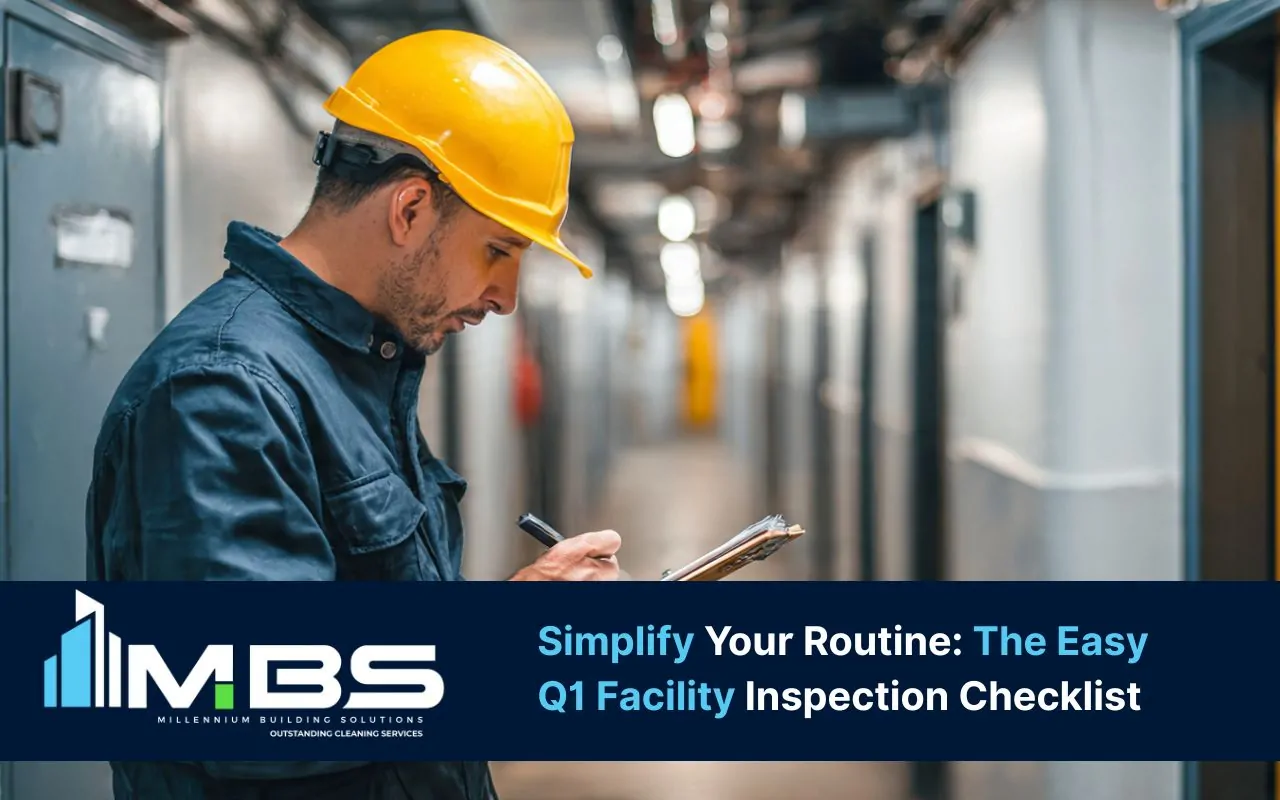
Millennium Building Solutions LLC can help you streamline daily checks with a Q1 facility inspection checklist. Facility work can feel overwhelming, especially with many details to track. However, a clear routine makes inspections easier. So, you save time, reduce stress, and keep operations steady.
With a Q1 facility inspection checklist, you stay organized and avoid missed steps. Therefore, inspections stay consistent, supplies stay ready, and issues get handled quickly. In other words, you create a smoother building experience for everyone. Millennium Building Solutions LLC supports teams that want simple, repeatable inspection habits.
Why Q1 checks matter for your building
Maintaining a facility means more than clean floors and working lights. Regular Q1 inspections help you catch small problems early. As a result, you avoid bigger disruptions later. A Q1 facility inspection checklist keeps offices, common areas, and restrooms in better shape.
- Spot minor issues before they grow into major repairs.
- Support safety by reducing hazards and downtime.
- Improve the daily experience for staff and visitors.
During a Restrooms audit, you confirm sinks, toilets, and dispensers work. Also, you track consumables like soap and paper goods, so you avoid last-minute shortages. When you document findings and plan corrective actions, you create a steady workflow. Millennium Building Solutions LLC often helps teams build habits that reduce surprise repairs.
What to include in a Q1 inspection checklist
An effective checklist covers key areas with simple, clear items. First, group tasks into safety, upkeep, cleanliness, and supplies. Then, add space for notes and follow-up. This way, everyone knows what to check and what to report. A Q1 facility inspection checklist also makes handoffs easier across shifts.
- Safety: exits clear, handrails secure, slip risks addressed.
- Upkeep: lights working, doors closing well, leaks spotted early.
- Cleanliness: floors clean, bins emptied, high-touch areas wiped.
- Supplies: dispensers full, paper goods stocked, storage organized.
In addition, include guidance for reporting issues and tracking corrective actions. For example, note what happened, who owns the fix, and the target date. That structure helps the Q1 facility inspection checklist stay useful, not forgotten.
Set clear goals before every inspection
Clear goals keep inspections focused. For instance, you might aim to improve safety, reduce waste, or boost comfort. Therefore, each checklist item should match the outcome you want. If you want fewer supply surprises, track usage trends and refill timing. If you want fewer repair calls, log small defects early.
- Safety: reduce hazards by spotting risks sooner.
- Efficiency: cut repeat work by tracking fixes clearly.
- Experience: keep spaces ready for occupants every day.
When goals are clear, your Q1 facility inspection checklist becomes a decision tool. As a result, teams can prioritize fixes and plan smarter. Millennium Building Solutions LLC can support teams that want inspections tied to real results.
Tailor the checklist to your facility
No two sites are alike. So, start with a walkthrough and note areas that need extra attention. For example, kitchens may need checks for vents and drains. Likewise, gyms may need equipment checks. After that, ask your team for feedback, because they often know hidden trouble spots.
Customize your Q1 facility inspection checklist for HVAC filters, lighting controls, outdoor areas, or storage rooms. Moreover, keep the wording simple, so anyone can follow it. If you want help aligning tasks to your building, connect with Millennium Building Solutions LLC.
Plan inspection timing and stick to it
A checklist works best with a schedule. Therefore, break tasks into daily, weekly, monthly, and quarterly actions. Daily work may include restrooms and supplies. Weekly work may cover exits and shared spaces. Monthly work often checks lighting, air flow, and plumbing. Then, quarterly reviews go deeper, using the Q1 facility inspection checklist as the guide.
- Daily: restrooms, quick supply checks, visible hazards.
- Weekly: common areas, exits, basic safety items.
- Monthly: lighting, HVAC checks, plumbing look-over.
- Quarterly: full walkthrough and deeper system review.
Frequently Asked Questions
How often should I use a Q1 facility inspection checklist?
Use it during your quarterly review, and also support it with daily, weekly, and monthly checks. That way, Q1 tasks never pile up.
What should I focus on during a restrooms audit?
Check toilets, sinks, dispensers, odors, and touchpoints. Also, confirm supplies are stocked and fixtures work as expected.
How do I track consumables without wasting time?
Create a simple refill baseline, then adjust based on real use. In addition, log shortages so you can spot patterns fast.
What’s the best way to manage corrective actions?
Write the issue, assign an owner, and set a due date. Then, confirm completion during the next round for accountability.
Can technology help inspections feel easier?
Yes. Mobile checklists, photos, and reminders reduce missed steps. As a result, reporting becomes faster and clearer.
Inspections work better with shared ownership. So, assign parts of the checklist by skill. Custodial staff can cover restrooms and supplies. Meanwhile, maintenance can review mechanical and electrical items. Brief handoffs help everyone stay aligned.
Use one shared log for accountability. Then, you can see who completed checks and when. This keeps the Q1 facility inspection checklist consistent across weeks. If your team needs a more organized approach, Millennium Building Solutions LLC can help you set clear roles and a repeatable routine.
Use simple tools to speed up inspections
Paper works, but digital tools often work better. For example, mobile apps let staff check items quickly, add photos, and send requests. Therefore, issues get attention sooner. Also, reminders help teams stay on schedule.
Over time, digital logs help you spot trends in repairs and supplies. Then, you can plan smarter and reduce repeat problems. A Q1 facility inspection checklist becomes even more useful when the data is easy to review.
Review results and keep improving
Collecting results is only the beginning. So, review notes from each Q1 facility inspection checklist and look for patterns. For instance, you may see repeat shortages or recurring wear in one area. Then, you can fix root causes instead of repeating quick patches.
Once you choose fixes, track outcomes and adjust the checklist. In other words, the checklist evolves as your building changes. If you want guidance on improving your program, reach out to Millennium Building Solutions LLC.
Keep compliance and records in order
Many sites must meet safety and health rules. Therefore, include required checks like fire equipment, emergency lighting, and ventilation basics. Keep records organized, because audits are easier with clear logs. Also, train staff so they know why each item matters.
When your Q1 facility inspection checklist matches your compliance needs, you lower risk. As a result, you avoid preventable issues and show strong building care.
Bring it all together for a smoother routine
When you follow a clear process, inspections stop feeling heavy. You cover restrooms, supplies, and follow-ups with less stress. Therefore, you prevent emergencies and support a better daily experience. The Q1 facility inspection checklist keeps the work consistent and easy to repeat.
With clear goals, team roles, and simple tools, you build a stronger routine. Moreover, you can keep refining the checklist as needs change. If you want support building a reliable inspection plan, Millennium Building Solutions LLC is ready to help through the contact page.