
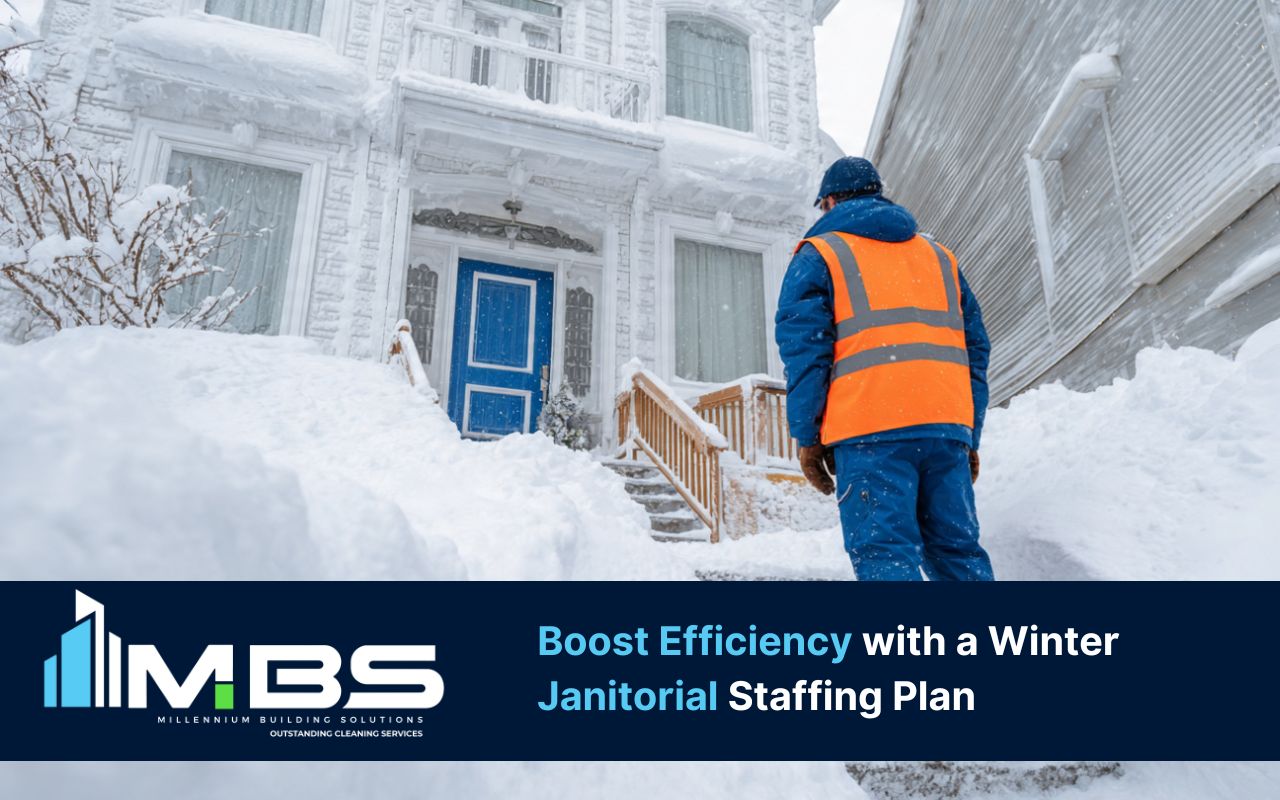
Winter is coming, and with it comes the challenging task of maintaining clean and safe facilities amid unpredictable weather. With a Winter janitorial staffing plan, you keep operations steady, whether during Night shifts or by adding day porter coverage. Efficiency is not only about headcount. Instead, it is about the right people at the right times.
At Millennium Building Solutions LLC, winter planning also supports SLAs and daily safety goals. Moreover, planning early can lift morale because every shift is planned and valued. As a result, you can handle winter pressure while keeping clients and teams confident.
Assessing Winter Cleaning Needs
First, review your facility layout and daily traffic patterns. Then, focus on entrances, lobbies, corridors, and stairwells. These areas often collect slush and water, so they need more frequent care. Also, note spots where slips are more likely, such as tile near doors.
Next, use past winter data to guide the Winter janitorial staffing plan. For example, check when storms caused the most work, which days needed stronger Night shifts, and how much day porter coverage was required. Therefore, you can staff smartly, avoid slow-day overload, and prepare for demand spikes.
- Map high-traffic zones and identify winter risk points.
- Review last season’s logs to find peak workload windows.
- Estimate staff needs per shift based on real usage patterns.
Building a Shift Schedule for Winter
Start by setting clear core shifts. For instance, early crews can handle overnight melt, while day teams manage busy-hour cleanup. Meanwhile, Night shifts can focus on deeper cleaning and next-day preparation. Also, assign clear roles so tasks do not overlap.
To support SLAs, add simple check-ins and clear output targets. For example, day porter coverage can include regular entry checks and quick restroom refills. Likewise, Night shifts can follow a priority list to finish key tasks first. At Millennium Building Solutions LLC, this structure helps keep service steady, even when weather changes fast.
- Early shift: entry care, mat swaps, and wet-floor control.
- Day shift: traffic-area touchups and quick spill response.
- Night shift: deep cleaning, floor care, and pre-morning prep.
Safety Steps for Winter Weather
Because winter hazards change quickly, set simple steps for snow and ice control. Keep salt, shovels, and ice melt close to key entry points. Then, use a checklist for each shift so staff treat the right areas first. Also, place signs or barriers until surfaces are dry and safe.
In addition, keep a clear communication line between leaders and crews. Encourage staff to report slip risks right away. As a result, you reduce injuries and protect building users. At Millennium Building Solutions LLC, consistent safety steps support trust and reliable outcomes.
- Stock winter supplies where they are used most.
- Use shift checklists for faster and clearer responses.
- Mark wet areas quickly and remove signs only when safe.
Training for Winter Cleaning Challenges
Even with a solid plan, training keeps performance strong. Provide hands-on sessions for tool use and ice melt handling. Teach even spreading to avoid waste and floor damage. Also, show safer shoveling methods to reduce strain and prevent injuries.
Moreover, practice real winter scenarios. For example, role-play a sudden overnight freeze or a midday snow burst. Then, review SLAs in plain language so everyone understands timing and priorities. At Millennium Building Solutions LLC, refresher sessions help teams stay confident during the toughest weeks.
Using Technology to Improve Efficiency
Scheduling tools can simplify staffing decisions and reduce missed coverage. For instance, digital calendars can alert teams to changes when weather shifts. Therefore, you can keep every shift covered, including weekend day porter coverage or late-night snow response.
Also, mobile logs can track task completion and SLA progress in real time. Supervisors can spot delays, then shift help where it is needed. As a result, the Winter janitorial staffing plan becomes more flexible and easier to manage.
Handling Seasonal Staffing Challenges
Recruit temporary help early, before winter demand rises. Partner with local staffing groups or schools to build a ready bench. Also, share clear role details so candidates know what to expect, including the pace of Night shifts and the consistency needed for day porter coverage.
Just as important, support retention. Recognize strong work with simple rewards and public thanks. Moreover, share SLA wins so teams see the impact of their work. At Millennium Building Solutions LLC, a respectful culture helps reduce turnover and improves winter stability.
Monitoring Results and Updating the Plan
Track key measures such as response time for ice treatment and completion rates for porter tasks. Then, compare results to SLAs to confirm performance. Weekly reviews can reveal patterns, like slow clearing in certain zones or surprise storms that stretch daytime crews.
After that, adjust staffing levels and shift lengths using the data. If one area needs constant attention, add a focused role. By doing so, you keep labor efficient and outcomes consistent. In other words, a Winter janitorial staffing plan should evolve as winter evolves.
Communicating Clearly with Your Team
Hold short daily huddles so crews can share overnight issues and weather risks. Then, invite feedback about what is working and what needs extra help. As a result, you can solve problems before they grow.
Also, keep a simple guide that explains duties during snow events, Night shifts, and high-traffic days. Make it easy to access on phones. At Millennium Building Solutions LLC, clear communication supports smoother work and better morale.
Frequently Asked Questions
How often should we update a Winter janitorial staffing plan?
Ideally, review it weekly during winter. Also, update it after any major storm or schedule change.
How can we keep Night shifts effective during heavy snow weeks?
Use clear priority lists and simple check-ins. Moreover, keep backup coverage for sudden weather spikes.
What does strong day porter coverage look like in winter?
It includes frequent entry checks, fast spill response, and steady restroom support. As a result, traffic areas stay safer.
How do SLAs affect winter staffing decisions?
SLAs define timing and output expectations. Therefore, they guide staffing levels, check-ins, and task priorities.
When should we bring in seasonal staff?
Start early, before the first storms. This way, you can train them and reduce last-minute coverage gaps.
Keeping Clients Confident All Winter
Gather quick feedback through short surveys or brief follow-up calls. Then, respond fast to concerns to maintain trust. Also, share simple performance summaries that highlight SLA progress and response times for Night shifts or day porter coverage.
At Millennium Building Solutions LLC, clear updates and reliable execution help clients feel supported. If you want help tailoring staffing to your building and goals, explore our office cleaning and janitorial services. When you are ready to align staffing and site needs, you can also reach out via our contact page.