
Managing a facility involves constant carpet care, and daily foot traffic and spills continually test your standards. This Carpet Stain Removal Guide therefore gives practical steps and turns daunting tasks into manageable solutions. Instead of relying only on simple blotting with water, you learn proven methods. In particular, you use coffee stain pre-treat methods, a spotting chart, and odor neutralizers effectively. As a result, you keep carpets fresh, professional, and aligned with your goals.
Understanding Common Carpet Stains in Commercial Facilities
Commercial spaces regularly face beverage, food, ink, and dirt spills. Most often, coffee stains are frequent; however, tea, soft drinks, and wine also appear. In addition, office ink and toner leave dark marks, while grease and sauces follow lunch. Meanwhile, entrances show mud or shoe polish from constant traffic.
Fiber type also changes outcomes. For instance, nylon and polyester resist some stains but absorb quickly, whereas wool holds oils and colors longer. Furthermore, humidity and foot pressure drive stains deeper. Therefore, prepare the right products and steps in advance. This Carpet Stain Removal Guide supports effective, targeted cleaning.
- Most common: coffee, oil, mud, and ink
- Know fiber type: synthetic vs. natural
- Act fast to reduce bonding
Importance of Prompt Action in Stain Removal
Speed matters, especially in busy facilities. Fresh stains sit on fibers and lift easily; by contrast, waiting allows liquids to sink and dyes to bond. Consequently, create a rapid response routine. In addition, equip staff with basic kits to handle stains on the spot. This simple preparation saves time and reduces the need for intensive treatments.
Swift action also supports a professional image. Clean floors signal care and attention, and they reassure employees and visitors alike. Whenever possible, respond within minutes to limit spread and chemical use. In this way, you protect both the carpet and your budget. This Carpet Stain Removal Guide encourages quick, consistent habits.
Effective Pre-Treating Techniques for Stubborn Stains
Coffee stain pre-treat process
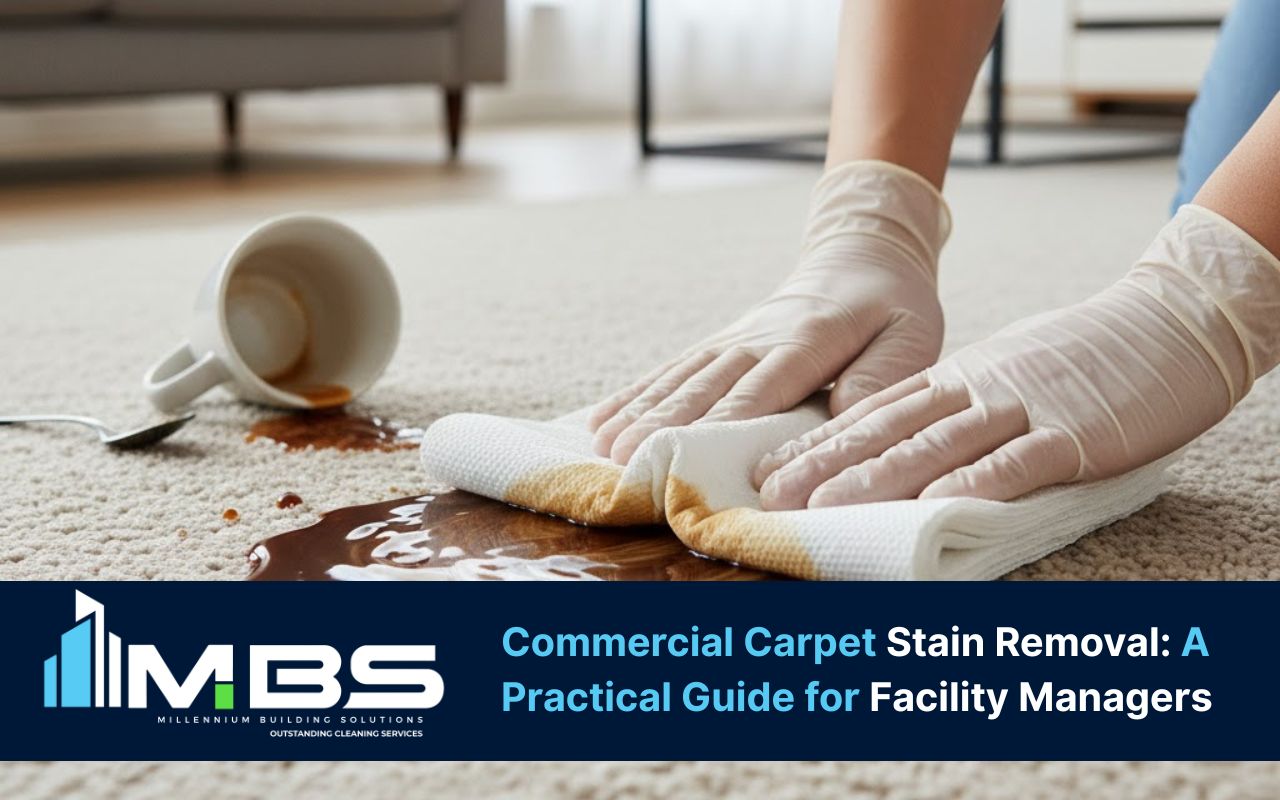
First, blot excess liquid gently to prevent further spreading. Next, apply a mild solution designed for coffee pigments. Then let it dwell for a few minutes so chemistry can work. Afterward, lift with blotting or gentle scrubbing. Above all, avoid aggressive rubbing that harms fibers.
For oil or red wine, take an additional precaution and test first in a hidden spot. Then dab solution with a clean cloth and allow dwell time again. Finally, rinse with a diluted neutral cleaner to remove residue. The Carpet Stain Removal Guide favors careful, methodical pre-treatment rather than rushed scrubbing.
Utilizing Spotting Charts for Targeted Cleaning Solutions
A spotting chart directly matches stains to the right agent. It clearly lists grease, ink, coffee, and dyes, and it recommends mild acid, alkaline, or solvent spotters for each. As a result, teams spend less time guessing and more time solving problems. Keep a chart on the cart for quick use.
Moreover, a chart helps standardize procedures across sites and shifts. Teams read icons and codes easily, even when staff changes. In turn, they tackle chemistry, not guesswork. This consistency reduces product waste and protects fibers. The Carpet Stain Removal Guide therefore promotes confident, consistent decisions.
- Identify stain type fast
- Select chemistry with confidence
- Apply, dwell, blot, and rinse
Choosing the Right Cleaning Products for Different Types of Stains
Always match cleaner to both stain and fiber. For example, use neutral pH detergents for water-based stains like coffee or tea. In contrast, choose mild alkaline cleaners for oils and grease. Solvent spotters, on the other hand, handle many inks and markers. In every case, always start gently before moving to stronger options.
Additionally, read labels and safety data to protect staff and surfaces. Use quick-dry, low-moisture options in busy zones where downtime is limited. Ready-to-use sprays further speed up routine tasks. Altogether, these tailored choices raise success rates and protect warranties. This Carpet Stain Removal Guide highlights smart selection at every step.
- Water-based stains: neutral detergents
- Oil-based stains: mild alkaline spotters
- Dye-based marks: appropriate solvents
Implementing Odor Neutralizers for Fresh-Smelling Carpets
After cleaning and drying, address hidden smells as well. First, lightly mist odor neutralizers to reach pads and fibers. Over time, enzymes and oxygen compounds break odor particles instead of just covering them. Consequently, they deliver long-lasting freshness.
Use neutralizers in break rooms and entryways where odors build quickly. Then add them to quarterly routines for deeper maintenance. Whenever possible, choose low-VOC options to support indoor air quality. By following this Carpet Stain Removal Guide, you keep spaces both clean and inviting.
Strategies for Preventing Future Stains and Maintenance
Prevention is powerful, and it often costs less than repeated stain removal. To begin, place entrance mats and runners to capture soil. Next, reduce food near carpeted workstations whenever you can. Also, vacuum daily in high-traffic zones. Otherwise, loose particles grind into fibers and worsen stains over time.
Beyond daily tasks, schedule weekly spot checks. Treat new spots immediately before they set. In addition, rotate furniture and area rugs to spread wear evenly. With this Carpet Stain Removal Guide, you not only react to stains but also extend carpet life and appearance.
- Deploy mats at all entrances
- Establish quick-response spot checks
- Vacuum and rotate strategically
Professional Carpet Cleaning Services: When to Seek Expert Help
Even with strong in-house routines, know when to escalate. If pre-treating, a spotting chart, and odor neutralizers still fail, call professionals. At that point, they bring strong equipment and specialized solutions. They also handle heavy traffic lanes and deep grime that standard tools cannot reach.
For best results, schedule services every six to twelve months. Hot-water extraction or low-moisture methods revitalize carpets and remove embedded soils. Furthermore, professionals align work with facility schedules to reduce disruption. In many cases, you also protect warranties with expert care. Visit Contact Millennium Building Services to plan service.
Eco-Friendly Approaches to Carpet Stain Removal
Today, many facilities also choose greener practices for health and sustainability. Whenever possible, use white vinegar, baking soda, and plant-based detergents. A simple mix of water, vinegar, and mild soap often handles many spots effectively.
At the same time, adopt microfiber cloths and low-water methods to reduce waste. In addition, seek eco-certified products with safe formulas and clear labels. In doing so, you align stain removal with broader environmental goals. The Carpet Stain Removal Guide fully supports these responsible choices.
Frequently Asked Questions
How fast should I respond to a spill?
Respond within minutes whenever you can. First blot, then apply the gentlest spotter, and finally follow the spotting chart.
What is the best coffee stain pre-treat?
Blot excess, apply a mild coffee-targeted solution, allow dwell time, then blot and rinse thoroughly.
Why use a spotting chart?
It clearly matches stain chemistry to safe, effective products and therefore prevents guesswork.
Do odor neutralizers mask or remove smells?
Quality neutralizers break down odor sources rather than masking them, delivering longer-lasting freshness.
When should I call professionals?
Escalate when stains persist, areas are large, or warranties require certified methods and documentation.
Maintaining Pristine Carpets in Commercial Spaces
To maintain pristine carpets in commercial spaces, implement a clear, repeatable program. Use coffee stain pre-treat methods, a spotting chart, and odor neutralizers together for best results. In addition, choose suitable cleaners each time based on stain type and fiber. When teams follow the same steps, you keep consistency across teams and sites.
Finally, combine fast action, prevention, and eco methods for a complete care strategy. Call experts whenever you face persistent stains or large restoration needs. For additional guidance and service options, explore Millennium Building Services. This Carpet Stain Removal Guide helps you keep carpets clean, fresh, and professional day after day.