
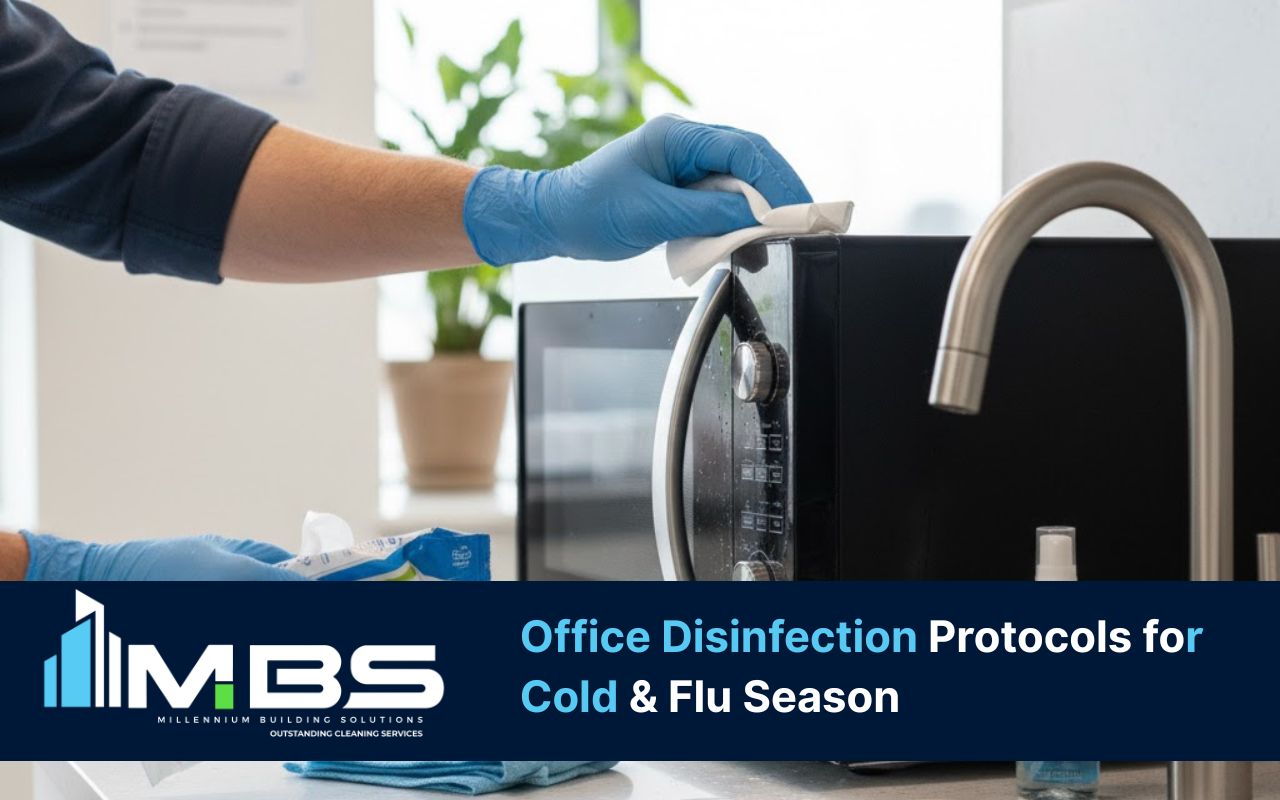
Combat cold and flu season with confidence by applying an effective, science-based plan. To start, adopt an Office Disinfection Protocol that targets germ hotspots and supports daily operations. Otherwise, shared spaces can become breeding grounds, affecting attendance and productivity. Therefore, focus on high-touch points and use EPA-approved disinfectants. In addition, prioritize employee well-being, and keep workflows steady with a clear, repeatable approach.
Above all, respect proper dwell time to ensure disinfectants work. Always allow solutions to remain wet for the labeled duration. As a result, these steps reduce infection spread and build a culture of care. In this guide, you’ll find essential actions to safeguard your workplace. Ultimately, an Office Disinfection Protocol keeps teams safe and projects on track during peak illness months.
Importance of Office Disinfection Protocols
Maintaining an effective office disinfection plan helps prevent the spread of colds, flu, and other pathogens. When germs linger on shared surfaces, they increase illness risk, absenteeism, and morale issues. Consequently, a solid plan reduces sick days and keeps projects moving.
Employees quickly notice attention to break rooms, conference tables, and restrooms. In turn, a clear Office Disinfection Protocol simplifies training and expectations. Over time, consistency builds trust, lowers health costs, and supports smooth workflows throughout the season.
Understanding High-Touch Points in the Office
High-touch points receive frequent contact and collect germs. Therefore, identify these areas first to customize your plan for maximum impact. This awareness helps teams adjust habits and share responsibility for hygiene, reducing illness rates and improving well-being.
- Door handles and railings
- Elevator buttons and light switches
- Shared keyboards, mice, and phones
- Conference tables and chair arms
- Break room appliances and faucets
Because these areas are touched so often, include them in your Office Disinfection Protocol. Additionally, reinforce accountability with quick reminders and visible checklists to maintain consistency.
Choosing the Right EPA-Approved Disinfectants
First, select EPA-approved disinfectants that match your targets. Products on List N meet standards for common cold and flu viruses. Next, read labels to match chemistry with surface types, such as glass, plastic, or stainless steel. This step avoids wasted effort and ensures results.
At the same time, consider safety and usability. Many products come as wipes or sprays for quick use. For clarity, provide clear instructions on dwell time and disposal. Also, stock adequate supplies so teams act quickly and confidently within your Office Disinfection Protocol.
- Verify List N status and virus claims
- Match product to surface material
- Train on dwell time and ventilation
- Store safely; track expiration dates
Proper Cleaning Techniques for Different Surfaces
Different materials require specific methods. For example, use a damp microfiber cloth with disinfectant on metal and plastic. In contrast, choose gentle sprays for glass to avoid streaks. Likewise, apply milder solutions on wood to prevent warping. Always confirm manufacturer guidance before using any chemical.
In addition, clean electronics with alcohol-based wipes that protect circuitry. Press gently and let devices air-dry. These techniques maintain finish quality while still meeting hygiene goals during the flu season.
Developing a Comprehensive Cleaning Schedule
To stay organized, design a visible schedule. Break work into daily, weekly, and monthly tasks. Typically, daily work addresses high-touch points. Meanwhile, weekly work covers deeper cleaning of shared areas. Finally, monthly work targets vents, carpets, and window sills. This visibility makes the plan routine, not an afterthought.
- Daily: Doorknobs, switches, shared keyboards
- Weekly: Conference rooms, break areas, appliance fronts
- Monthly: Vents, carpets, window sills
Implementing Dwell Time for Effective Disinfection
Dwell time is how long a disinfectant must stay wet to work. Skipping dwell time leaves viruses behind and weakens results. Therefore, always follow label directions. Times may range from 30 seconds to several minutes, so read carefully. Reapply if the surface dries too soon.
To make this easier, use timers or wipes with printed times to guide teams. Additionally, train staff to ensure surfaces stay wet for the full interval. Without proper dwell time, your Office Disinfection Protocol becomes far less powerful.
Training Employees on Hygiene Practices
To reinforce your efforts, empower staff with simple hygiene tips. Promote handwashing, sanitizer use, and covering coughs and sneezes. Also, post reminders near sinks and high-traffic areas. When people understand how germs spread, they are more likely to support the plan.
Furthermore, offer brief sessions on cleaning technique and dwell time. Encourage buddies to remind each other about hygiene breaks. Whenever possible, recognize diligent teams to reinforce good habits beyond the season.
Monitoring and Evaluating Cleaning Procedures
To keep efforts on track, conduct regular checks. Create logs for each zone and record cleaning times and products used. Then, supervisors should review weekly and address missed areas quickly. This routine ensures the plan stays effective.
In addition, gather employee feedback on schedules and methods. Adjust based on issues, like streaking screens or overlooked handles. By continuing audits, you keep the approach practical and current.
Creating a Culture of Health and Wellness in the Workplace
Ultimately, culture extends beyond cleaning. Encourage open communication about illness and remove stigma from sick days. For added support, offer flu shots on-site and sanitizer at desks. When management clearly values health, staff is more likely to invest in the plan.
Moreover, celebrate wins like fewer sick days or client praise. Share quick tips in newsletters and huddles. By weaving wellness into daily routines, you boost morale and teamwork.
Frequently Asked Questions
How often should we disinfect high-touch points?
During peak season, disinfect high-touch points several times daily, and then adjust frequency based on traffic and risk.
What makes a product an EPA-approved disinfectant?
EPA-approved disinfectants are registered and listed for specific pathogens. For confirmation, check EPA List N and product labels for claims.
What is dwell time, and why does it matter?
Dwell time is the required wet contact period. It ensures pathogens are killed as stated on the product label and, therefore, directly affects effectiveness.
Can the same method be used on all surfaces?
No. Instead, match techniques to materials to avoid damage. Always confirm manufacturer guidance for specialty finishes and electronics.
Where can I get professional help?
For expert support, Contact Millennium Building Services to request tailored support and scheduling.
Ensuring a Safe and Productive Office Environment
In summary, implementing a thorough Office Disinfection Protocol protects teams during cold and flu season. Focus on high-touch points, use EPA-approved disinfectants, and respect dwell time. In combination, consistent training, clear schedules, and a strong wellness culture reinforce these steps and reduce sick days.
To go a step further, partner with Millennium Building Services or Contact Millennium Building Services to strengthen your strategy and keep your workplace running smoothly.